 Fast Delivery
 Online Support
 Safe Shopping

 United Arab Emirates
 Qatar


STEM Learning Kits for Kids in Saudi Arabia - Explore STEM Toys and Educational Kits
STEM learning kits help children understand science, technology, engineering, and maths through practical, hands-on activities. Instead of only reading about a concept, children can build, test, code, observe, and improve their ideas.
For parents in Saudi Arabia, STEM kits are useful for home learning, weekend projects, reducing passive screen time, and building future-ready skills. For schools, they support classroom activities, STEM labs, robotics clubs, enrichment programmes, and project-based learning.
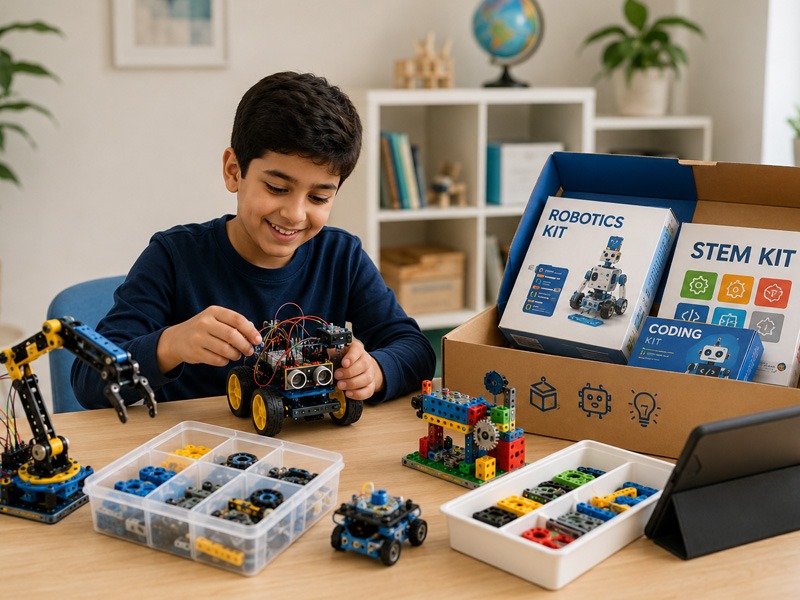
At ATLABShoponline, parents, teachers, schools, and education buyers can explore STEM toys, robotics kits, coding kits, science kits, maker tools, and classroom learning solutions for different age groups and learning goals.
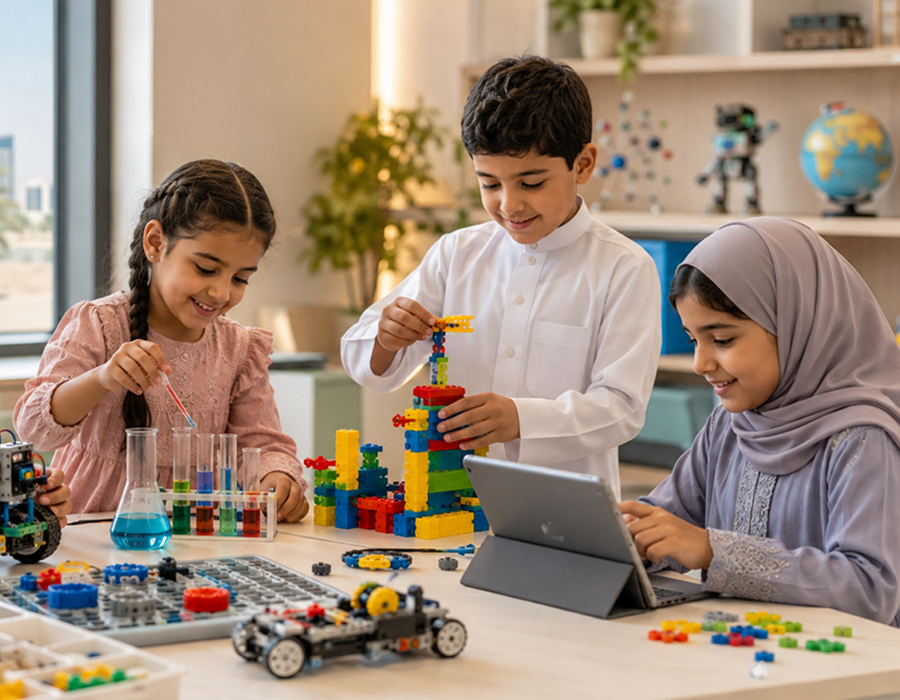
What Are STEM Learning Kits and Why Are They Important?
STEM stands for Science, Technology, Engineering, and Mathematics. STEM learning kits are designed to make these subjects easier to understand through action-based learning.
A child may build a model, test a design, programme a robot, measure results, solve a challenge, or observe a science reaction. This makes learning more active and easier to remember.
STEM kits are important because they help children move from memorising facts to applying ideas. They encourage curiosity, problem-solving, creativity, and logical thinking.
For home use, STEM kits give children a productive way to learn beyond school hours. For classrooms, they help teachers explain concepts through group activities, experiments, and projects.
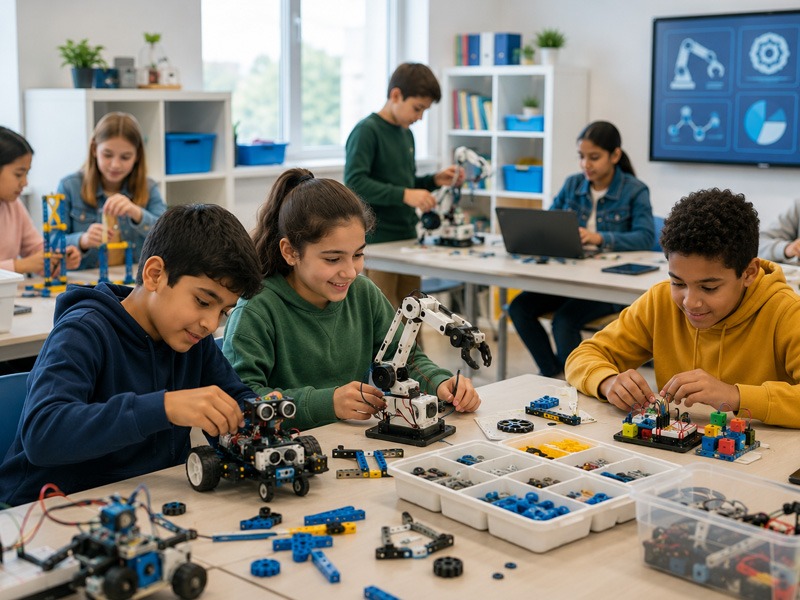
Fundamentals of STEM Education
STEM education focuses on practical learning. It helps children understand how science, technology, engineering, and maths connect with real-world situations.
STEAM adds Art to STEM. This brings creativity, design, storytelling, and visual thinking into technical learning. For younger learners, STEAM can make activities more engaging and less intimidating.
In Saudi Arabia, schools and families are increasingly focusing on digital skills, innovation, robotics, coding, and problem-solving. STEM kits can support this shift by giving children practical exposure from an early age.
STEM learning also extends beyond the classroom. It can support science fairs, robotics clubs, coding challenges, innovation labs, after-school programmes, and family learning projects.
STEM Kits vs Traditional Learning Toys
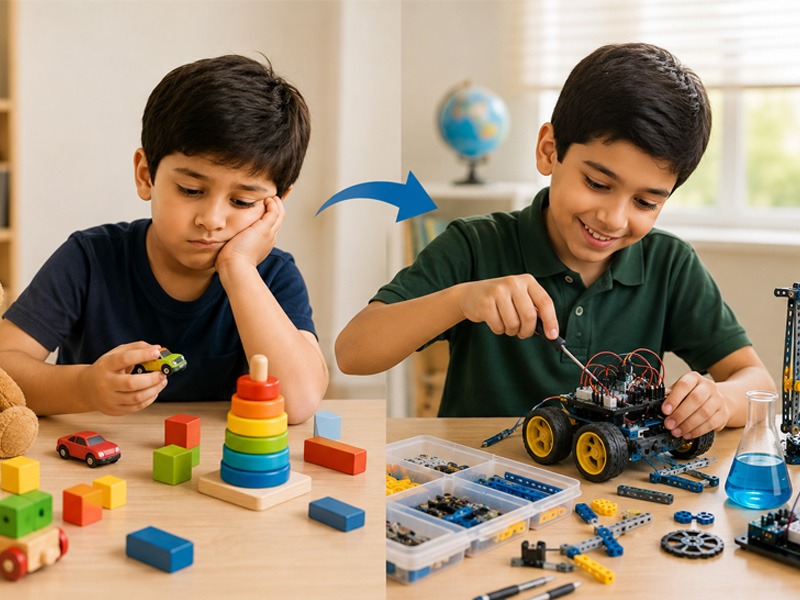
Traditional toys can entertain children, but they may not always support structured skill development. STEM toys are different because they combine play with a clear learning outcome.
A STEM kit encourages children to ask questions, test ideas, solve problems, and try again. This makes playtime more purposeful.
For parents, STEM kits offer stronger long-term value because many kits can be reused in different ways as the child grows. For schools, they improve classroom engagement and support group-based learning.
STEM kits are especially useful when children need more than passive entertainment. They help shift learning towards active participation, exploration, and practical understanding.
Key Areas of Focus in STEM Kits
STEM kits cover different learning areas. The right choice depends on the child’s age, interest, and skill level.
Common focus areas include:
- Science and maths: experiments, measurements, observation, logical reasoning, and problem-solving.
- Technology and engineering: robotics, coding, building systems, sensors, movement, and mechanical design.
- Creativity and innovation: maker projects, design activities, prototyping, and open-ended building.
- Career readiness: early exposure to robotics, AI, automation, data thinking, and engineering concepts.
These areas help children connect classroom knowledge with real-life applications.
Key Skills Developed with STEM Learning Kits
STEM kits support a wide range of skills that are useful for both school learning and future development.
Children can develop:
- Problem-solving and critical thinking
- Logical reasoning and coding basics
- Creativity and innovation
- Teamwork and communication
- Focus, patience, and persistence
- Hands-on experimentation
- Confidence with technology
- Better understanding of science and maths concepts
For parents, these skills help children become more curious and independent learners. For schools, they support learning outcomes linked to inquiry, collaboration, project work, and practical STEM education.
STEM Learning Kits by Age Group
STEM kits should always be selected based on the official age guidance provided by the product or OEM. A kit that is suitable for a teenager may be too complex for a younger child, while an early learning kit may not challenge older students.
Parents and educators should check the product page carefully before buying. The examples below show how STEM learning can progress across different stages.
Early Years: Ages 3-5
Young children learn through touch, colour, movement, sorting, building, and simple play.
Suitable STEM learning may include early building kits, sensory activities, simple puzzles, storytelling sets, and basic cause-and-effect activities.
At this stage, the goal is not advanced science or coding. The focus should be on curiosity, motor skills, communication, and confidence.
Primary Learners: Ages 6-8
Children aged six to eight are ready for more structured activities. They can follow instructions, compare results, and complete simple challenges.
Suitable kits may include beginner STEM kits, simple coding tools, early robotics activities, building sets, and guided science kits.
For schools, this age group works well with small-group STEM activities that encourage teamwork and discussion.
Pre-Teens: Ages 9-12
Pre-teens can explore deeper STEM concepts through robotics, coding, experiments, and engineering challenges.
Suitable kits may include coding robots, programmable devices, robotics learning sets, science experiment kits, and engineering projects.
This stage is ideal for developing problem-solving, logical thinking, troubleshooting, and independent learning.
Teens: Ages 13+
Teenagers need more advanced learning challenges. They can work with robotics, AI, drones, automation, 3D design, VR tools, and maker-based projects.
For schools, these kits can support STEM labs, innovation clubs, technology electives, competitions, and career-focused learning. For home learners, they offer deeper exposure to future-ready technical skills.
STEM Kits for Schools and Classrooms in Saudi Arabia
Schools need STEM kits that are practical, durable, repeatable, and easy for teachers to manage.
Classroom-ready STEM kits can support inquiry-based learning, project-based learning, group activities, assessment tasks, and hands-on demonstrations.
Schools should look for kits that offer:
- Clear learning outcomes
- Teacher support or activity guidance
- Group activity potential
- Durable components
- Reusability across classes
- Age or grade suitability
- STEM lab compatibility
- Scope for coding, robotics, science, or engineering projects
For education buyers in Saudi Arabia, STEM kits can support classroom engagement, after-school programmes, robotics clubs, and innovation-focused learning spaces.
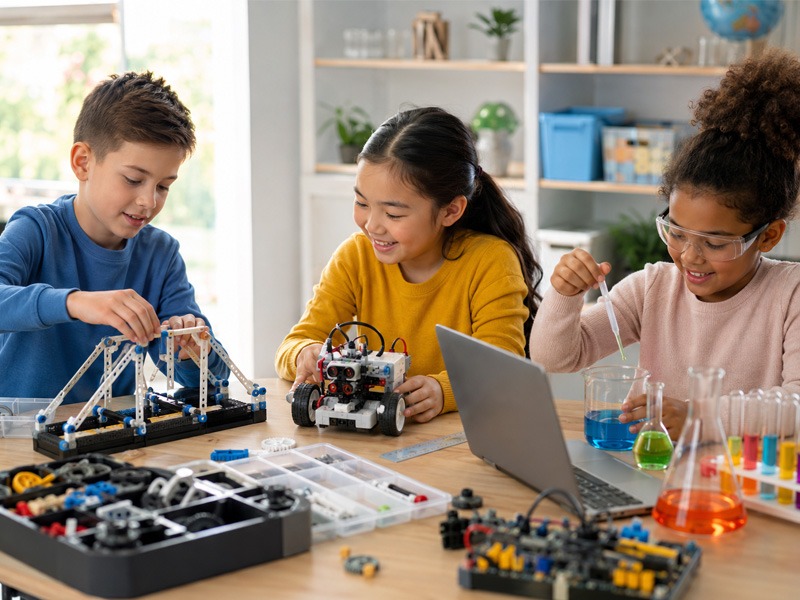
STEM Educational Kits for Kids and Home Learning
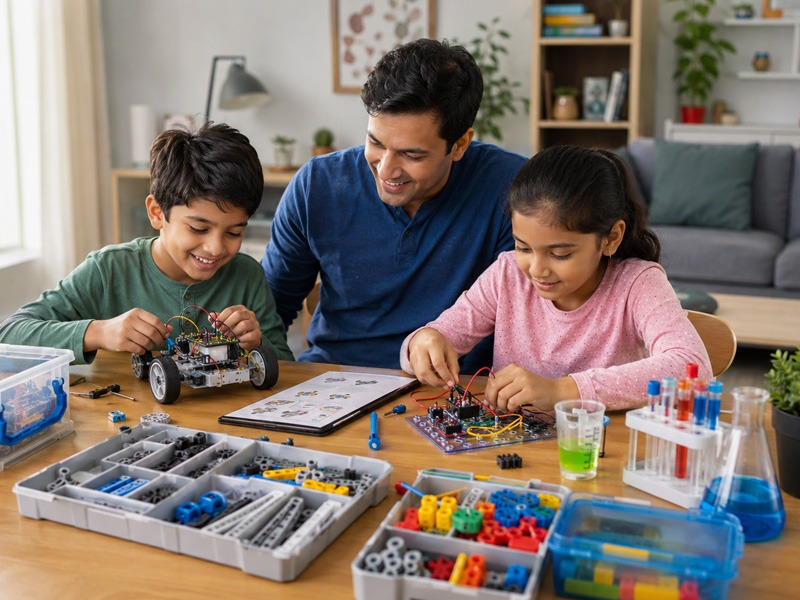
At home, STEM kits give children a structured way to explore learning outside school. They are useful for weekends, holidays, after-school learning, family projects, and screen-free activities.
Home STEM kits can help children:
- Explore science and maths through play
- Build confidence with technology
- Work independently with guided activities
- Learn through trial and error
- Collaborate with parents or siblings
- Connect learning with real-world examples
Many STEM kits are compact and suitable for home environments. Some kits can also be used by siblings of different ages, depending on the activity and product guidance.
How to Choose the Right STEM Kit
The right STEM kit should match the child’s age, interest, ability, and learning goal.
Before buying, consider:
- Is the kit suitable for the child’s official age range?
- Does the child enjoy science, coding, robotics, building, or design?
- Is it for home learning, classroom use, or both?
- Does it need adult or teacher guidance?
- Can the kit be reused?
- Does it support open-ended learning?
- Are instructions, apps, or guides available?
Open-ended kits such as building, robotics, and maker sets usually offer longer-term value because children can use them in different ways. Single-purpose kits can still be useful when the goal is to introduce one specific concept quickly.
Top STEM Activities for Kids and Students
STEM kits become more effective when they are used through practical activities.
Useful STEM activities include:
- Coding challenges that teach logic and sequencing
- Robotics tasks that involve movement and sensors
- Science experiments that support observation and recording
- Design projects that involve building and testing
- Engineering challenges that encourage improvement
- Group activities for teamwork and communication
- School STEM weeks, science fairs, and robotics clubs
These activities help children apply what they learn instead of only memorising information.
Benefits and Challenges of STEM Education
STEM education offers many benefits, but parents and schools should also understand the challenges.
Key benefits include stronger engagement, better problem-solving, improved creativity, teamwork, practical learning, and early exposure to future careers.
Common challenges include the cost of advanced kits, lack of teacher confidence, difficulty choosing age-appropriate products, and limited time for hands-on activities in traditional learning environments.
ATLABShoponline helps by offering access to genuine STEM learning products, age-based categories, trusted education brands, and solutions suitable for both home and school use.
STEM Education and Career Readiness in Saudi Arabia
STEM learning can help children prepare for future industries such as robotics, AI, automation, engineering, data science, coding, and advanced manufacturing.
Early exposure does not mean forcing children into technical careers. It means giving them the confidence to understand technology, ask better questions, and solve problems creatively.
For schools, STEM kits can strengthen innovation-focused programmes. For parents, they can help children build useful skills from an early age.
Accessibility and Inclusivity in STEM Learning
STEM learning should be accessible to different types of learners. Some children may learn better through touch, movement, visual guidance, repetition, or group interaction.
Inclusive STEM kits can support mixed-ability groups when activities are flexible and guided properly.
Parents and schools should look for kits that allow children to learn at their own pace, work collaboratively, and explore ideas in more than one way.
Safety, Quality and Durability of STEM Kits
Safety and quality are important when buying STEM kits for children or classrooms.
Parents and schools should check:
- Recommended age range
- Product materials
- Component size
- Electrical or battery requirements
- Durability for repeated use
- Instructions and safe handling guidance
- Suitability for individual or group use
Schools should also carry out regular checks to make sure components are complete, clean, and safe for repeated classroom activities.
Why Buy STEM Kits from ATLABShoponline?
ATLABShoponline supports parents, schools, and education buyers looking for trusted STEM learning kits in Saudi Arabia.
Parents can explore age-appropriate STEM toys for home learning, gifting, weekend projects, and screen-free engagement. Schools can review learning kits suitable for classrooms, STEM labs, robotics activities, and structured programmes.
Buying from a trusted education-focused platform helps ensure product authenticity, category relevance, and better suitability for the child’s learning stage.
FAQs on STEM Learning Kits for Kids in Saudi Arabia
▸ What is a STEM kit, and how does it work?
A STEM kit is a hands-on learning product that helps children explore science, technology, engineering, and maths through building, coding, experimenting, or problem-solving activities.
▸ Why is STEM important for children?
STEM helps children develop logical thinking, creativity, problem-solving, confidence with technology, and practical learning habits that support future-ready education.
▸ Which STEM kits are best for younger children?
Younger children need safe, simple, age-appropriate kits that support building, sorting, basic problem-solving, creativity, and early exploration. Always follow the official product age guidance.
▸ Can STEM kits be used at home?
Yes. Many STEM kits are suitable for home learning, weekend activities, holiday projects, and parent-child collaboration.
▸ Can schools use STEM kits in classrooms?
Yes. STEM kits can support classroom activities, STEM labs, robotics clubs, science fairs, project-based learning, and after-school programmes.
▸ Do STEM kits need screens or internet?
Some kits are screen-free, while others use apps, coding platforms, or digital guidance. Parents and schools should check the product details before buying.
Conclusion
STEM learning kits are practical tools that help children learn by doing. They support curiosity, problem-solving, creativity, teamwork, coding logic, and confidence with technology.
For parents in Saudi Arabia, STEM kits offer meaningful home learning and screen-free engagement. For schools, they support classroom learning, STEM labs, robotics activities, and future-ready education.
Explore STEM learning kits for kids in Saudi Arabia at ATLABShoponline. Choose from STEM toys, robotics kits, coding kits, science kits, maker tools, and classroom learning solutions designed for practical skill development.
