


 Saudi Arabia
 Qatar
Qatar


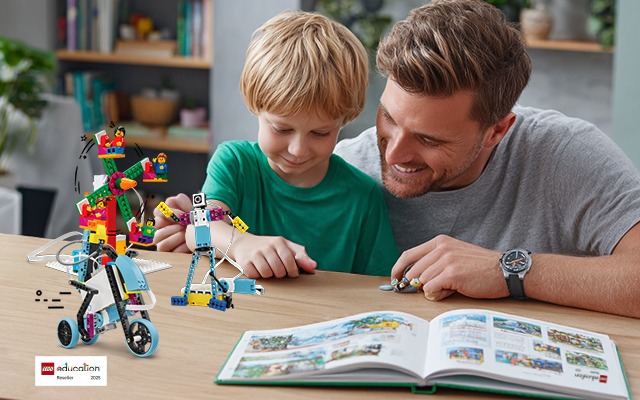
What Makes a Toy Truly Educational? A Buyer’s Guide for GCC Parents
With the new heightened increase in STEM subjects and learning toys, there are a lot of toy manufacturers that have rebranded their existing product lines as learning tools. In many instances, these toys or learning tools don’t help children learn new skills or enhance their capacity for learning.
Some of the tools that claim to help children learn coding rarely work and may be actively harming children by promoting excessive screen usage at a young age. At the same time, the right educational toys can help students significantly understand complex STEAM concepts even at a young age.
what makes a toy truly educational? Here’s a buyer’s guide for parents in the GCC.
Four factors that can make a toy truly educational
The toy is research based
Good educational toys are backed by years of research into child education, child psychology, and how different teaching styles impact students later in life. For instance, LEGO® Education’s STEM kits are based on the 5E Model of education and the Learning Through Play approach that has been tested and proven worldwide. These kits are also developed in collaboration with education and child development experts and tested in institutions worldwide.
Suitable for the age group
Good educational tools are designed for specific age groups. Educational toys should be just the right amount of challenging and should encourage students to learn by themselves. If it's too challenging, kids may get disinterested and stop using them. If it's not challenging enough, it may not contribute to their development and may even get boring for them after a while. Educational toys work best when they are designed for specific age groups and developmental stages.
Keeps children engaged
Educational toys work because they are fun, and kids want to use them without being forced to. If the toys become boring or frustrating for them, it defeats the purpose. If the ‘toy’ aspect of an educational toy is lost, it won’t be much different from a large and intimidating encyclopaedia.
The “learning through play” approach is a well understood and proven approach to education, especially for young kids. According to a UNICEF, play is actively engaging, joyful, meaningful, iterative, and socially interactive. Without these elements, children may not engage with them or may need additional support or motivation to use them.
Learning is intentional
Child brains are constantly learning, with every stimulus and experience shaping how they perceive the world around them. So, kids will have something to learn from just about any toy, from a stuffed animal to a DIY robotics kit.
But if you’re getting an educational toy for your kid, you should get something designed with specific learning outcomes. For instance, KUBO’s Coding Math Set is designed to help kids learn maths concepts along with robotics and coding, while StoryTales from LEGO® Education is designed to help develop speaking and listening skills.
How to choose an educational toy for your children:
Educational toys are a long-term investment for your kids’ growth, and the stakes are higher than most people assume. Even just simple toys sometimes pose huge safety risks for kids. Considering the large number of educational toys available, parents face an uphill task trying to sort out which ones actually help their kids and which ones may actively harm them.
Here are a couple of tips to help make your choices:
Choose a brand that prioritises research
There are many brands that sell products and kits marketed as learning solutions, but a lot of them offer little to no learning outcomes. In some cases, they may even be harmful to children. For instance, there were and still are many apps that promises to help children learn complex subjects through fun animated videos or games. But even now, it is not yet very clear if these contribute to learning outcomes or if they’re harming kids.
But there are some brands like LEGO® Education that actively prioritises research, bases them on the latest scientific understanding, and tests their learning solutions before launching them. Focus on these brands to get the best results for your kids.
Ensure the toys are safe for your children
For very young kids, toys with small parts may present a risk of asphyxiation. Toys or DIY kits that may need kids to use power tools or soldering irons may present a risk of physical injury.
Educational toys with screens or those that require kids to use screens may negatively affect your child’s brain development. Free learning apps designed for kids often collect kids’ data and may distract them with ads.
- Ensure that the toys are appropriate for your kids
- Avoid toys with a screen
- Check if your kids may need supervision while using toys.
- Choose toys that teach your children subjects they are interested in
If your child is interested in robotics, get them toys they can learn more advanced concepts from. Get coding and programming related toys to kids who are interested in that.
The reason for this is obvious; if kids love something, encourage them to pursue that.
That said, educational toys may also help students better understand concepts they’re struggling with in the classroom. Educational toys help kids engage with and explore concepts at their own pace and may help ignite interest in subjects they otherwise find boring.
Choose toys that come with support materials
Pick toys that come with learning materials, lesson plans, and tools for parents and teachers.
For instance, an educational kit with a box full of sensors, motors, and controllers may be helpful for kids who have worked with similar tools before and know exactly what they can and want to do. But kids who have never used them before may find them confusing and the kit may just sit in the box.
Learning guides and support materials will help amateurs get started even if they have no experience. For kids who have worked with similar components, the support materials will ensure they don’t get stuck and help them explore new concepts.
The easy choice? Get educational toys from Atlabshoponline
Atlabshoponline has a diverse collection of STEM solutions carefully curated by our team of experts. The team evaluates solutions based on their effectiveness in developing STEAM skills and how they contribute to a child’s holistic development before adding them to our catalogue. The team also ensures that the platform has a diverse catalogue for kids of different ages and focused on specific STEAM subjects.
