


 Saudi Arabia
 Qatar
Qatar


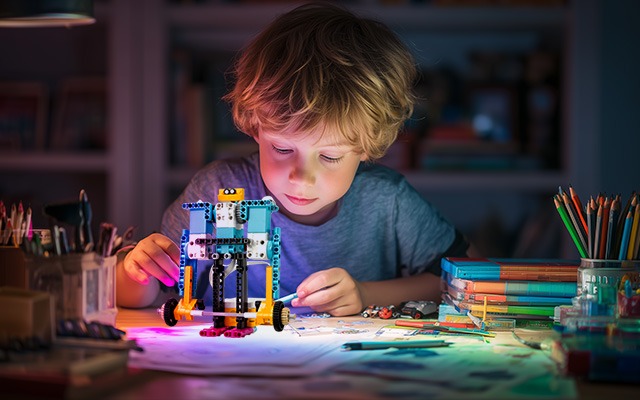
Screen-Free Learning: Why Unplugged STEM Toys are Crucial for Brain Development
The World Health Organisation has issued very strict restrictions on screen time for kids.
According to WHO:
- Kids under the age of 1 shouldn’t have any screentime.
- Kids between the ages of 2 and 4 shouldn’t get more than 1 hour of screen time.
But in many institutions, traditionally, STEM education is overly reliant on screens. Particularly when it comes to teaching kids to code and use electronics, it may appear impossible to teach the lessons without screens. At the same time, younger kids learn things quickly, and the longer we wait to introduce them to STEAM subjects, the less effective it will be. This puts parents and teachers in a difficult spot.
In this article, we explore the health consequences of too much screen time and how parents and teachers can teach STEM subjects without too much reliance on laptops, tablets, or smartphones.
What are the potential health consequences of too much screen time for kids?
The WHO recommendations are based on the impact of excessive screen time, and while it speaks largely about kids under the age of 5, it can have negative consequences even for older kids. In general, screentime affects the regulation of dopamine, a neurotransmitter associated with happiness, the feeling of accomplishment, motivation, as well as addiction and neurological disorders.
In this section, we discuss some of the direct consequences of excessive screen time. Please note that this list is not exhaustive or comprehensive and doesn’t include indirect consequences of excessive screen time.
Decline in cognitive abilities
Multiple studies have found correlations between screen time and decline in cognitive ability. The Quebec Longitudinal Study of Child Development found that there was a 7% unit decrease in class participation and a 6% unit decrease in math proficiency in fourth grade with each one-hour increase in TV exposure at around two years of age.
Similarly, studies across the world have found a correlation indicating declining cognitive decline with increasing screentime.
Behavioural and emotional problems
Behavioural and emotional development problems were one of the key reasons behind the WHO’s screen time recommendation. The American Psychological Association conducted a meta-analysis of 117 studies involving 292,000 children worldwide and found that high screen time often led to emotional and behavioural problems and that kids with these problems often turn to screens to cope with them.
These problems included anxiety, depression, aggression, and hyperactivity. According to this specific study, older children between the ages of 6 and 10 were more likely to develop these problems.
Time away from healthy activities
This is a problem that may be obvious to most parents. When kids are allowed to use smartphones or tablets, they tend to become more interested in them than they are in playing games, reading books, or engaging with other kids. Most parents often end up having to set time limits for their kids to use phones as they stop playing or having fun, instead opting to stare at screens all day long.
Affects the development of thefronto-striatal circuit
The fronto-striatal circuit are neural pathways in the brain that connect the frontal lobe with the corpus striatum. This circuit is related to behaviour control, planning, and a well-developed fronto-striatal circuit is associated with flexible decision making.
In a 2-year-long study that followed the development of the fronto-striatal circuit, researchers found a negative correlation between screen time and the strength and development of the fronto-striatal circuit. This can affect the child’s behavioural regulation and decision-making abilities as they grow.
Screen fatigue among kids and teachers:
Screens are generally tiring, largely for the eyes, but also for the mind. Spending too much time using a laptop or a tablet can be exhausting and make them unable to focus on other things afterwards.
How can parents and teachers teach STEM subjects without screens?
In the previous decades, there were a lot of projects and tools that focused on keeping kids engaged in classrooms. But they were largely dependent on screens, mostly in the form of e-learning tools and animated lessons. These tools offered options for educators to use traditional tools to teach coding and programming.
But as we better understand child development, educators are trying to shift away from screens. This situation presents a challenge: how do you teach kids STEM concepts and keep them engaged without using screens?
Here are some strategies you can try:
Screenless tools
Many ed-tech companies are coming up with screenless tools to teach STEM subjects to kids.
For instance, KUBO has a set of learning kits to teach children coding, programming, robotics, and mathematical concepts without using screens. These tools use tiles that connect to each other like puzzle pieces, which children can attach to each other to create pseudo-code which a small robot learns and executes.
The entire process works is built to be screenless.
Focus on holistic child development
Instead of focusing solely on STEAM subjects, a holistic approach to help children develop their social skills, emotional skills, their ability to collaborate and work as a team, their creativity, and other aspects would create a better screenless approach.
A holistic approach will also make children better prepared to understand and explore STEAM subjects and learn concepts on their own.
Hands-on unsupervised time
Hands-on unsupervised time enables children to explore and learn to learn on their own. It will enable children to make decisions and become more self-sufficient.
This means getting kids STEM learning tools and toys and letting them explore them themselves.
Use books and paper
The right combination of books can keep kids engaged as they learn STEM concepts. For instance, colouring books can help children develop their fine motor skills, and interactive books can help children explore and learn on their own.
You can also use colourful flash cards or soft toys to teach children about empathy and emotional regulation through interactive storytelling.
Get screen-free STEM learning tools from AtlabShopOnline
Atlab Shop online has a diverse collection of STEAM learning toys and tools for children of all age groups. The solutions are carefully curated by the experts at Atlab based on the latest studies on child development, child psychology, and approaches to education.
Check out AtlabShopOnline and get screen-free STEM learning solutions for your kids.
