Saudi Arabia
 Qatar
Qatar


STEM Learning Kits for Kids: Explore STEM Toys & Educational Kits in UAE
What if your child’s favorite playtime activity could also prepare them for the careers of tomorrow? Learning in the modern world is dynamic and no longer limited to textbooks and a classroom setting; it is interactive, practical, and driven by curiosity. Learning kits based on STEM (Science, Technology, Engineering, and Math) enable the translation of abstract concepts into visible, fun activities that children can feel, touch, and test. STEM kits fill the gap between play and purposeful learning as parents seek to nurture critical thinking at home and schools look to bring the real world of science and engineering into the classroom. They promote kids to construct, write codes, and discover, making the learning process enjoyable and effective.
Are you prepared to find out the most popular STEM toys and learning kits in the UAE and how they can be useful to your child or school? Read this guide to get acquainted with the complete range of STEM learning opportunities.
Did you know?
The market size of UAE STEM education in K-12 was USD 179.4 million in 2024, and it is projected to reach USD 426.6 million by 2030, with a CAGR of 15.2%.
The UAE is the frontrunner in STEM education research in the GCC: approximately 33.3% of published STEM-education research in the GCC is based in the UAE.
56% of the UAE’s graduates in STEM courses at government universities are women.
What Are STEM Learning Kits and Why Are They Important?
STEM learning kits are physical learning materials used to turn Science, Technology, Engineering, and Math into interactive and approachable concepts for children. Rather than passively memorizing ideas in a textbook, children experiment with things, construct their own activities, and solve puzzles. It can be a STEM robot kit, a coding block set, or a simple circuit-building kit, but such materials make learning a fun-filled process.
To parents, STEM learning toys can be a means of fostering curiosity in the home environment, developing problem-solving skills, and lessening time on the screen in favor of valuable home play. In the case of schools, the STEM classroom kits are compatible with the STEAM curriculum in delivering ready-to-use classroom materials to the lesson plans, science labs, and STEM activities to students. They assist teachers to develop interactive lessons that fulfill STEM education in schools objectives without losing attention among students.
In the UAE, robotics, coding, and engineering are included in the national education programs as part of future-ready skills. Over 100 schools in the UAE, as well as more than 100,000 students studying in STEM education programs are operating robotics labs. STEM kits offered to children are crucial in equipping them with the skills necessary to work in industries in the future. They offer an affordable means of launching STEM educational products into homes and classrooms, bridging the gap between theory and practice.
Fundamentals of STEM Education
STEM education is not merely a topic, but a pedagogic approach, which combines Science, Technology, Engineering, and Math in real-life application. It stimulates children to think critically, ask questions, and come up with solutions through experimentation and through cooperation. In the UAE, where innovation and the ability to meet future demands are priorities of the country, STEM education is the key to the creation of the new generation of problem-solvers.
Below are the basics of STEM higher education to understand:
- STEM and STEAM: STEM concentrates on science, technology, engineering, and math, with STEAM including the extra A, arts, which promotes creativity and design thinking in addition to technical abilities.
- Significance in UAE Schools: STEM in schools is promoted by national policies, where robotics, coding, and Artificial Intelligence are more and more often introduced into primary and elementary education.
- Beyond the Classroom: STEM learning extends beyond school into robotics clubs, coding bootcamps, science fairs, and innovation competitions where students can put their learning into practical use.
- Practical Application: STEM learning kits and activities close the gap between theory and practice by transforming abstract concepts into hands-on and engaging experiences.
- Getting Them Ready for Future Careers: STEM education readies students to work in AI, robotics, data science, and other high-demand sectors through early exposure to problem-solving, engineering concepts, and computational thinking.
STEM vs Traditional Learning Toys
The difference between STEM learning kits and traditional toys is not just about playstyle but about the type of skills and habits children develop. Here is a clear comparison to understand the impact:
|
Factor |
Traditional Learning Toys |
STEM Learning Toys & Kits |
|
Learning Style |
Passive play, often repetitive. |
Active, hands-on learning that encourages exploration and problem-solving. |
|
Skill Development |
Basic motor skills, imagination. |
Critical thinking, logical reasoning, coding, and engineering skills. |
|
Engagement Level |
Limited engagement after novelty wears off. |
Sustained engagement through experiments, challenges, and progressive difficulty. |
|
Educational Value |
Focused on entertainment with limited curriculum tie-in. |
Aligned with STEM education in schools and supports STEAM curriculum goals. |
|
Real-World Application |
Minimal connection to real-life problems. |
Simulates real-world scenarios, builds future-ready skills. |
|
ROI for Parents & Schools |
Short-term entertainment value. |
Long-term learning investment, better classroom engagement, and measurable outcomes |
Key Areas of Focus in STEM Kits
STEM kits are meant to cultivate curiosity and develop confidence in children in various fields over time. They prompt children to learn how science, technology, engineering, and maths relate to the world they live in. These kits also help them be creative and prepare them to become part of the professional world in the future.
-
Science & Math
Kits based on science and math expose children to experiments, measurement equipment, and logical thinking. They enable children to see the things of the real world, gather facts, and process findings in a manner that makes abstract ideas concrete.
- To Parents : Assists kids in learning to think critically, understand real-world science, and gain a strong foundation in numeracy.
- In Schools : Ideal to meet the results of the science curriculum in the UAE, help learners master learning in the lab, and develop inquiry-based lessons.
-
Technology & Engineering
Technology and engineering kits are based on assembling, coding, and robotics, teaching kids how systems operate and how to create solutions. Kids are introduced to the engineering design process by these kits, which include coding robots, assembling mechanical structures, and more.
- To Parents : Invites practical home building and simple programming and transforms screen time into effective skill-training time.
- In Schools : Helps to integrate the UAE STEAM curriculum with computational thinking modules, coding challenges, and project-based engineering activities.
Creativity & Innovation
Such kits encourage children to create, design, and do something outside the box. Maker kits and design-based challenges can help the students to think outside the box and relate STEM to art (STEAM).
- In the case of Parents : Enhances creativity and imagination and improves problem-solving.
- In the case of Schools: It works well with project-based learning, design thinking workshops, and innovation challenges where teamwork and originality are promoted.
4. Career Readiness
Science, technology, and engineering (STEM) kits that are career-oriented. They equip students with aptitudes required in the future, exposing them to skills in the industry (AI, data science, robotics, and renewable energy). They relate learning to the practical world, demonstrating to kids why STEM is important.
Key Skills Developed with STEM Learning Kits
STEM learning kits not only impart knowledge in science and engineering but also influence the cognitive process. These kits refine problem-solving and the way of interacting with the surrounding world among children. These kits foster interactive learning, kids are able to remember much, and they acquire skills that are essential in their academic progress in addition to future employment. To parents, they make children future-ready, confident learners, and to schools, they are in direct line with the UAE STEAM education outcomes and goals.
-
Problem-Solving and Critical Thinking
Children are taught to solve big problems by breaking them into smaller parts, deconstruct situations, and work out solutions. This competence will create resilience and the ability to look at problems creatively and not feel afraid of them.
-
Coding and Logical Reasoning Skills
Coding kits and sequencing-based activities impart the idea of computational thinking. It involves children thinking in patterns, loops, and logic, which they can later apply to programming and digital literacy.
-
Teamwork and Collaboration
Most of the STEM kits have group projects, which make children share ideas, communicate, and cooperate. This equips them with problem-solving skills in a team in school and at work in the future.
-
Creativity and Innovation
Design, experimentation, and building allow children to think outside the box and come up with their distinct solutions. This cultivates innovation and imagination.
-
Physical Learning for Better Retention
Such active involvement makes students acquire knowledge in a deeper and more lasting way. They do not just read about science or math, but they learn it by practice in their lives.
STEM Learning Kits by Age Group
The selection of the appropriate STEM kit is based on age, stage of development, and readiness to learn. A properly balanced kit makes sure that children are not too challenged or too bored. This translates into gradual skill acquisition in the house among the parents. In the case of schools, it gives the teachers the opportunity to introduce systematic, age-based lessons that conform to UAE STEAM curriculum standards.
Ages 4–6 (Early Years)
The children of this age are innately inquisitive and learn through play, observation, and imitation. Preschool STEM kits are aimed at sensorial development, early problem-solving, and entry-level math.
- Examples: LEGO® DUPLO sets, Coding Express trains, color-sorting sets, early math manipulatives.
- Parents Benefits: Counting, color, sequencing, and cause-and-effect are all introduced by means of playful activities. Promotes practical learning and reduces passive screen time.
- Schools : Provides educators with early years lessons using ready-built material that teaches sorting, patterns, and simple logical thinking in accordance with early learning requirements.
Ages 6–8 (Primary)
At this age, children are now prepared to learn in a structured way, work together, and explore under guidance. Creative projects in STEM kits provide the foundation of basic coding, problem-solving, and teamwork.
- Examples: KUBO Coding kits,LEGO® SPIKE Essential, basic science experiment kits, building sets.
- Parents Benefits : Inspires a sense of confidence by allowing kids to complete easy coded challenges, create simple models, and complete their first science experiment.
- Benefits to Schools : Ideal to incorporate the principles of computational thinking and inquiry-based learning in the classroom. Helps address the needs of the UAE Ministry of Education STEAM curriculum.
Ages 9–12 (Pre-Teens)
Pre-teens can reason more, handle more complex projects, and solve problems through teamwork. At this level, the kits based on STEM revolve around robotics, engineering fundamentals, and initial data analysis.
- Examples:Ozobot Evo, Sphero BOLT, hi-tech science kits, mini-electronics projects.
- Parents : The parenting benefits as these help in independent learning and creative thinking. Young people are able to plan, write, and debug personal projects at home.
- School : Ideal in STEM workstations, robotics, and science fairs. Provides organized project learning and practical evaluation.
Ages 13+ (Teens)
Teens are prepared for higher-level problem-solving and career-oriented STEM. At this stage, kits are devoted to their real-life applications and the industries of the future.
- Examples: Robolink drones, AO Seed AI kits, Arduino and Raspberry Pi projects, high school robotics lab bundles.
- Parents Benefits : Parents can help teens build advanced coding, robotics, and engineering skills, as well as create portfolio-worthy projects that can aid in college applications in the future.
- School Benefits: Funds high school STEM labs, hackathons, and innovation challenges. Meets UAE Vision 2030 by equipping students to work in AI, data science, and sustainable technology.
STEM Kits for Schools and Classrooms
The best impact of STEM education is the inclusion of the program in the school curriculum. The STEM kits targeted at schools are intended to correspond with the UAE Ministry of Education STEM and STEAM programs, and it will be easier to introduce educators to inquiry-based and hands-on learning in the classroom.
Also, in Abu Dhabi private elementary schools, a study found that 75% of STEM elementary teachers strongly understand what STEM education is, and 50% of them report challenges in implementing STEM lessons (e.g. due to lack of resources, time constraints, or training needs).
-
Curriculum Integration
STEM kits can be aligned with the UAE STEAM curriculum requirements. They can be used to facilitate teachers to develop lessons based on national education objectives. These kits encourage guided science projects, coding projects, and engineering projects that enrich theoretical learning with practical applications.
-
Lesson Plans and Training of Teachers
AtlabShopOnline ships lesson plans and teacher guides with all classroom kits. Training programs are used to inform educators on the ways they can make the most of STEM kits and therefore bring exciting and valuable classroom experiences to students without significant prior training in the field of coding or robotics.
-
Different Class Size Scalable Kits
STEM classroom kits come in scalable packages whether in a small group activity or in a full-class environment. Schools can use multi-student packs and lab bundles to implement STEM in a number of grades and sections in a cost-effective manner.
Benefits for Schools
- Collaboration: Students make teams and learn to share ideas and solve problems as a team.
- Inquiry-Based Learning: Encourages critical thinking and self-exploration.
- Project-Based Learning: Students develop projects that reflect their knowledge of the concepts of STEM in the real world.
- Practical Evaluation: With practice and collaboration, teachers can assess students according to their work and teamwork as opposed to memorizing.
Examples of Classroom Kits
LEGO® SPIKE Essential, KUBO Classroom Packs, and entire robotics lab bundles are all popular in classrooms. Such kits foster interactivity, innovation, and curriculum relevance and equip students to work in future-oriented sectors of the UAE.
STEM Educational Kits for Kids & Home Learning
Learning in STEM does not end at the school level, and in fact, the home is one of the most effective areas where a child can learn to be curious and think critically. Educational STEM kits for children convert kitchens, living rooms, and play areas into small laboratories and maker spaces. They enable children to learn through doing, thus allowing them to associate science and math concepts with real life.
Let us unravel more perks of STEM educational kits for kids & home learning:
-
Encourage Curiosity at Home
Children are inherently curious, and STEM kits are a structured method of fostering their curiosity. Kids learn through trial and error and by asking questions like “why,” whether it’s making a mini volcano, programming a robot to follow a path, or making a simple circuit. This not only broadens their knowledge base but also helps them retain their innate sense of wonder.
-
Cut the Screen Time and Engage in Active Play
STEM learning toys encourage children to shift from passive digital consumption to active participation. Rather than spending hours in front of a screen, children work on real-life experiments and challenges that engage their hands, bodies, and minds.
-
Low-Cost Alternatives for Families
Parents do not have to spend too much money to provide their children with meaningful STEM experiences. Many entry-level kits are available in the AED 1000 and below range, such as coding blocks, introductory science sets, and hands-on maker kits. These offer great value for money and enable families to experiment with STEM learning before moving on to more advanced kits.
-
Family Attachment and Cooperation
Families can have a lot of fun with STEM projects. Parents may share models, puzzles, and science experiments with their children. This mutual experience strengthens relationships, develops communication skills, and transforms learning into an enjoyable family experience rather than a burden.
-
Self-Directed and Lifelong Learning
The ability of STEM kits to grow with the child is one of their biggest strengths. For example, children might begin withLEGO® DUPLO and then progress to LEGO® SPIKE Essential, robotics kits, and even AI-based projects. Most kits are designed for guided self-learning, which fosters independence, confidence, and problem-solving skills.
-
Cross-Age Usability
Certain STEM kits are flexible in their use, and children of varying ages can be involved. This means a single kit can offer long-term interaction and shared learning opportunities for the entire family.
-
Real-World Applications
Home learning kits do not simply represent a game; they mimic real-life situations. For example, children can be taught how to generate renewable energy by creating solar-powered models or learn the fundamentals of engineering by constructing operable bridges. This connection with real-world issues makes the lessons memorable.
-
Innovative Learning and STEAM Integration
Innovation requires creativity. STEAM kits that mix art and design with science and technology help children engage in storytelling, create their own projects, and think beyond formulas. This stimulates imagination and promotes a balanced approach to problem-solving.
-
Parent-Friendly Support Resources
Most STEM products include online tutorials, activity guides, and even video walkthroughs. This makes it easy for parents, even those without a background in science or teaching, to guide children through projects with confidence.
-
Compact and Home-Friendly
Kits are convenient to store and set up in apartments and houses in the UAE. Portable, modular kits mean parents can easily manage cleanup and even carry them while traveling or on holidays.
How to Choose the Right STEM Kit?
It is important to make the appropriate choice of a STEM kit so that children remain interested, challenged, and motivated to learn. An optimally selected kit is age-dependent, interest-dependent, and skill-dependent. Before you choose, here are the key considerations to keep in mind when selecting the right STEM kit:
-
Take into Account Age and Stage of Development
All STEM kits have a particular age range. Children from younger ages can use sensory-oriented kits and simple coding blocks, while children and teens require more difficult projects such as robotics, artificial intelligence modules, and engineering kits. The selection of age-based kits eliminates frustration and maintains the motivation of kids.
-
Match Skills and Interests
A STEM robot kit or a coding kit could be an ideal option if a child is interested in robots. Maker kits or engineering sets can be a perfect choice if a child likes building and designing. Schools may also align kits to particular curriculum objectives like physics experiments, data science fundamentals, or design challenges.
-
Open-Ended Kits Compared to Single-Purpose Kits
Open-ended kits such asLEGO® or modular robotics systems enable children to make several projects out of a single purchase and promote creativity and replay. Single-purpose kits include flashcards or one-time experiments and can be effective at introducing one concept, although they might not have much long-term interaction.
-
Ease of Use and Guidance
As a parent, find kits that have easy-to-follow instructions, tutorials, and internet support so children can learn on their own or with minimal supervision. In the case of teachers, select classroom-friendly kits by buying lesson plans, assessments, and training content in a single package.
-
Durability, Safety, and Quality
Make sure that the kits are made of non-toxic materials that are safe and certified according to international safety standards. In the case of schools, durability is an important feature since kits will be used by more than one student.
-
Scalability for Classrooms
Schools should consider how the kits might be extended into larger classes or full STEM labs. Multi-user licenses and classroom packs are usually more economical for institutional use.
Top 5 STEM Activities for Kids & Students
Activities associated with STEM are a great opportunity to put theory into practice so that children may experiment, construct, and solve issues creatively. The activities are used both at home and in classrooms and are effective for both parents and schools aiming to promote hands-on and project-based learning.
-
Coding Challenges
Coding activities instruct in sequencing, logic, and problem-solving. They are able to program robots to move, draw, or follow patterns using STEM robot kits or visual coding platforms.
-
Design Projects
In maker-style design challenges, children are able to apply creativity and engineering concepts simultaneously. Examples are the construction of bridges, simple machine design, or making useful prototypes out of common materials.
-
Robotics Competitions and Robotics Clubs
Schools could establish robotics clubs and students would work in teams to create and program robots. Competitions such as FIRST LEGO® League or local events in the UAE related to robotics encourage students to become innovators and cooperate.
-
Science Fairs and Experiments
Simple and advanced experiments offered by STEM learning kits can be demonstrated by students at science fairs. This assists in the acquisition of presentation skills and scientific thinking.
-
Hackathons and STEM Weeks
Schools can organize hackathons or STEM weeks to immerse students in a project-based learning process. Such competitions are motivating as they entail collaborative efforts, invention, and the application of science and technology concepts.
Benefits and Challenges of STEM Education
STEM education is very essential in developing the future-ready learner, and it has both benefits and issues that parents, teachers, and policymakers should take into consideration. Here are the most obvious benefits and challenges of STEM education:
Benefits of STEM Education
- Promotes Interactive Learning: Practical activities ensure that students are kept active throughout the learning process. It also makes science and mathematics more enjoyable.
- Develops Creativity: STEM and STEAM programs influence children to think out of the box and come up with creative solutions.
- Fosters Teamwork: Various STEM programs are cooperative, as they assist students to obtain skills in communication and cooperation.
- Grows Problem-Solving Skills: Students learn to be systematic in solving problems and locating practical solutions.
- Future Careers: Prepares students to work in AI, robotics, engineering, and data science professions.
Challenges of STEM Education
- Expensive Advanced Kits: Kits and lab equipment in robotics may be costly to schools and households.
- Shortage of Trained Teachers: In most cases, there is a problem of having teachers who are proficient in coding, robotics, or engineering.
- Disproportionate Access: Learners in rural locations or lower-income households might not have access to STEM learning kits or materials.
- Adaptation to Traditional Curriculum: Schools may have a hard time adapting STEM into existing lesson plans.
Atlab Solutions
Atlab can help solve those challenges by offering:
- School pricing to ensure that STEM kits are more affordable to schools.
- Training of teachers to re-equip them.
- Kits aligned to curriculum and UAE STEAM-compliant.
- Long-term support for both schools and parents to make the implementation process successful.
STEM Education and Career Readiness in UAE
The idea of STEM education does not merely focus on the construction of academic knowledge but also equips children and students with the skills needed for the sectors of the future. In the UAE, where innovation and technology are to be the backbone of the country’s education system, STEM learning kits and programs will play a key role in ensuring that the country will have a workforce capable of operating in a globalized and techno-driven economy.
-
An Educational Training to Future Industries
Education in STEM exposes children to the basics of AI, robotics, coding, data science, and sustainable technologies at an early stage. This exposure enables them to develop the confidence and the talent they will require to thrive in high-demand areas.
-
Alignment with UAE Vision 2030
The Vision 2030 of the UAE focuses on innovation, diversification, and knowledge-based industries. Schools with STEM education help fulfill this national objective directly by generating students ready to work in the new fields of automation, green energy, and intelligent technologies.
-
Benefits for Schools
Schools should market their STEM programs as career-oriented programs which provide them with a competitive advantage in college applications and technical skills. Learning becomes more real and interesting through partnerships with industry, STEM clubs, and innovation competitions.
-
Benefits for Parents (B2C)
Investment in STEM learning toys and STEM education kits to build long-term skills future-proofs the child with education. These kits help kids discover the world of coding, engineering, and problem-solving safely and in a structured manner, putting them on the pathway to significant careers.
Accessibility and Inclusivity in STEM Learning
Every child, irrespective of ability and background, should have the chance to learn through STEM so that they can also succeed. In order to make STEM really equitable and effective, accessibility and inclusivity are critical.
Aiding Diverse Students
By incorporating sensory details, visual clues, and stepwise guided instructions, STEM kits can be modified to accommodate children with special needs, such as autism, ADHD, and others. Inclusive kits make learning friendly and attract the attention of all students.
Significance of Inclusive STEM Kits
Developing inclusive STEM learning kits is essential to provide all learners with an equal chance of acquiring problem-solving, coding, and engineering skills. With inclusivity, no student will be left behind, and it allows a constructive classroom atmosphere.
Mixed-Ability Group Learning
Classroom STEM kits can be constructed to fit mixed-ability groups to enable every student, despite learning pace, to make a contribution to the project. Teachers are able to give differentiated tasks, and teamwork and peer learning are achieved.
Safety, Quality and Durability of STEM Kits
The most important considerations when choosing STEM education kits are safety and durability, whether to use them at home or in the classroom. Quality kits will be safe and enduring to learn and offer better value for money.
-
International Certifications
To ensure that STEM kits are non-toxic, child-safe, and in accordance with international education standards ISO, ASTM, and UAE school safety requirements. The kits must have international safety certifications. This is particularly relevant to schools where the kits are bought in large quantities.
-
Non-Toxic and Environmentally Safe Materials
Kits constructed of environmentally friendly and non-toxic components are less harmful to children and more advantageous to the environment. Purchases should be checked in regard to material safety by parents and schools.
-
Durability in Schools and Institutions
Because classroom kits are shared among different students, durability is an important factor. Good kits have the capability of being used again and again so that their performance will remain consistent over several school terms.
-
Significance of Frequent Safety Inspections
Parents and schools need to conduct frequent inspections on STEM kits to make sure they are not using damaged components and dangerous materials. This measure is safety-oriented and eliminates incidents during practical work.
Why Buy STEM Kits from AtlabShopOnline?
It is equally important to select the correct place to purchase STEM learning toys and STEM learning products as it is to select the right kit. AtlabShopOnline guarantees quality, authenticity, and assurance to both schools and parents in the UAE.
Benefits for Parents
- Availability of authentic STEM education sets and STEM learning toys.
- Premium certified products at safe prices that are delivered within a short time anywhere in the UAE.
- Discounted prices below AED 1000 to start learning STEM in the comfort of the family.
Benefits for Schools
- Scalable classroom and STEM lab bulk order options.
- Training and implementation support of teachers to be in line with UAE STEAM curriculum.
- Multiple term upgrades, spares, and curriculum support.
Conclusion
STEM education is an avenue to equip children with a future that is technology-oriented. When transformed into a place of exploration and innovation, STEM kits enable students to develop problem-solving skills, ingenuity, and confidence to last their whole life.
Be it at home with a parent trying to spark curiosity or a school searching to incorporate practical STEM learning into your course, the appropriate STEM kits are all that matters.
AtlabShopOnline provides a full complement of STEM learning kits, teacher materials, and classroom solutions and is easy to start with with respect to UAE STEAM standards. Browse our catalog, select the correct kit for your requirements, and empower the upcoming generation of innovators. Connect with us to know more.
FAQs
-
What is a STEM Kit and How Does It Work?
A STEM kit is a hands-on educational tool that helps children explore Science, Technology, Engineering, and Math concepts through interactive projects, coding, and experiments.
-
Why Is STEM Important in Early Childhood?
Early exposure to STEM develops curiosity, problem-solving skills, and logical thinking: construction of a strong foundation for future learning.
-
Which STEM Kits Are Best for Preschoolers, Primary Students, and Teens?
- Preschoolers (Ages 3–5): LEGO® DUPLO, Coding Express, early math manipulatives.
- Primary Students (Ages 6–8):KUBO Coding kits,LEGO® SPIKE Essential, basic science kits.
- Pre-Teens (Ages 9–12): Ozobot Evo, Sphero BOLT, mini-electronics kits.
- Teens (Ages 13+): Robolink drones, AO Seed kits, Arduino and Raspberry Pi projects.
-
Are STEM Kits Aligned with the UAE STEAM Curriculum?
Yes. Many STEM kits for schools are designed to support the UAE Ministry of Education STEAM standards and are suitable for integration into lesson plans.
-
What Are Affordable STEM Kits Under AED 1000?
Entry-level science kits, coding blocks, and maker kits are available under AED 1000, making STEM education more accessible for families.
-
Can STEM Kits Be Used Without Internet or Screens?
Yes. Many kits include unplugged activities that allow children to build, experiment, and explore without needing constant screen time.
-
How Do STEM Kits Prepare Kids for Future Careers?
They introduce students to robotics, coding, and engineering concepts: building skills for high-demand industries like AI, renewable energy, and data science.
-
Do You Provide After-Sales Support for Schools?
Yes. AtlabShopOnline offers teacher training, curriculum guides, and ongoing technical support to ensure successful implementation.
- Are STEM Kits Safe and Eco-Friendly?
All kits offered are made with non-toxic, certified materials and meet international safety standards, making them suitable for school and home use.
STEM Learning Kits
-
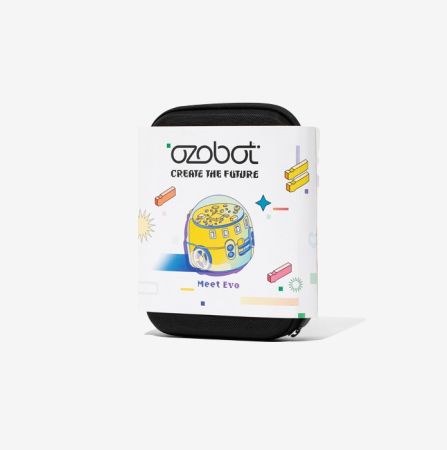
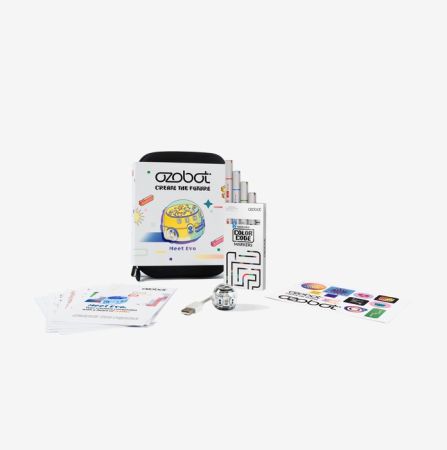
Ozobot Evo Entry Kit Coding and Robotic kit for kids aged 5 and above, with interactive coding robot
Special Price AED 749.00 Regular Price AED 999.00 -
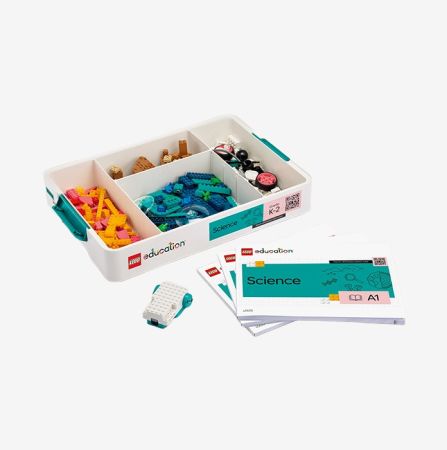
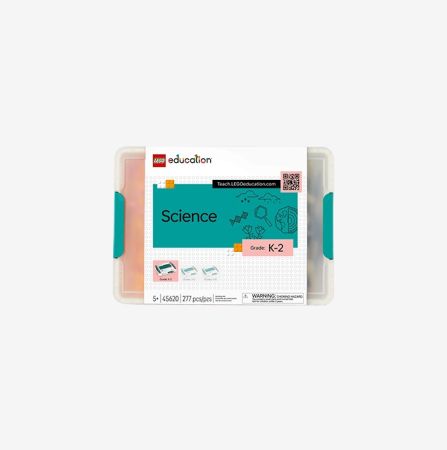
LEGO® Education Science Kit K-2 | Hands-On STEAM Learning for Early Learners
Special Price AED 1,179.00 Regular Price AED 1,474.00 -
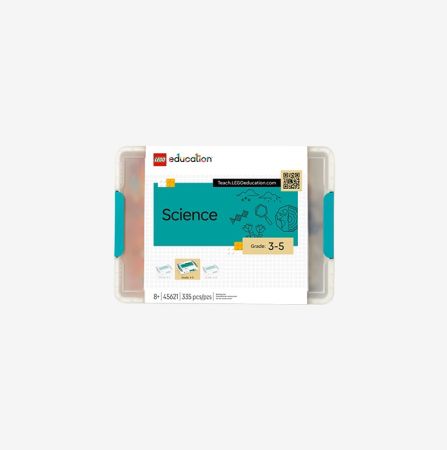
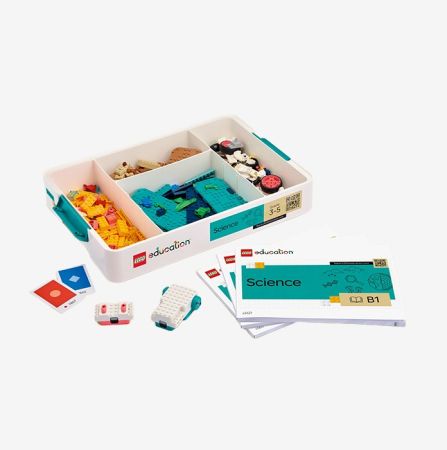
LEGO® Education Science Kit 3-5 | Interactive STEAM Kit for Primary Classrooms
Special Price AED 1,469.00 Regular Price AED 1,836.00 -
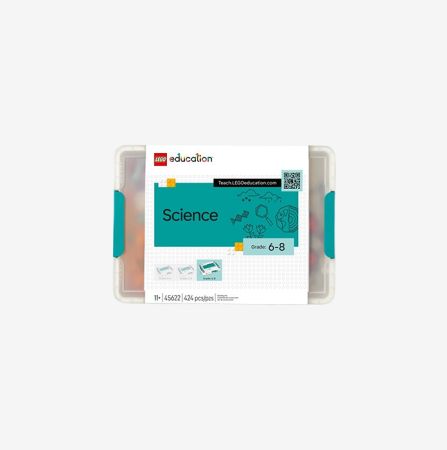
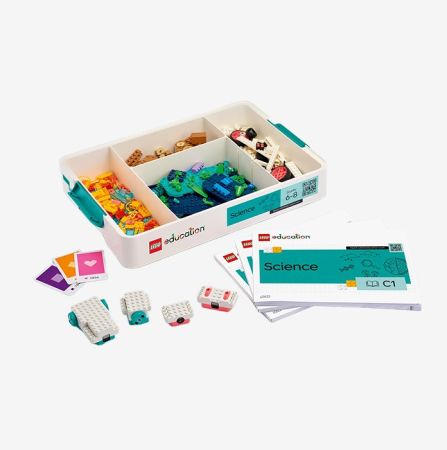
LEGO® Education Science Kit 6-8 | Advanced STEAM Kit for Middle School
Special Price AED 1,819.00 Regular Price AED 2,274.00